RESEARCH > Mouse Models
Mouse Developmental Biology
Mouse developmental biology using mouse models (Purkinje cell degeneration mice, Alzheimer disease mutant mice)
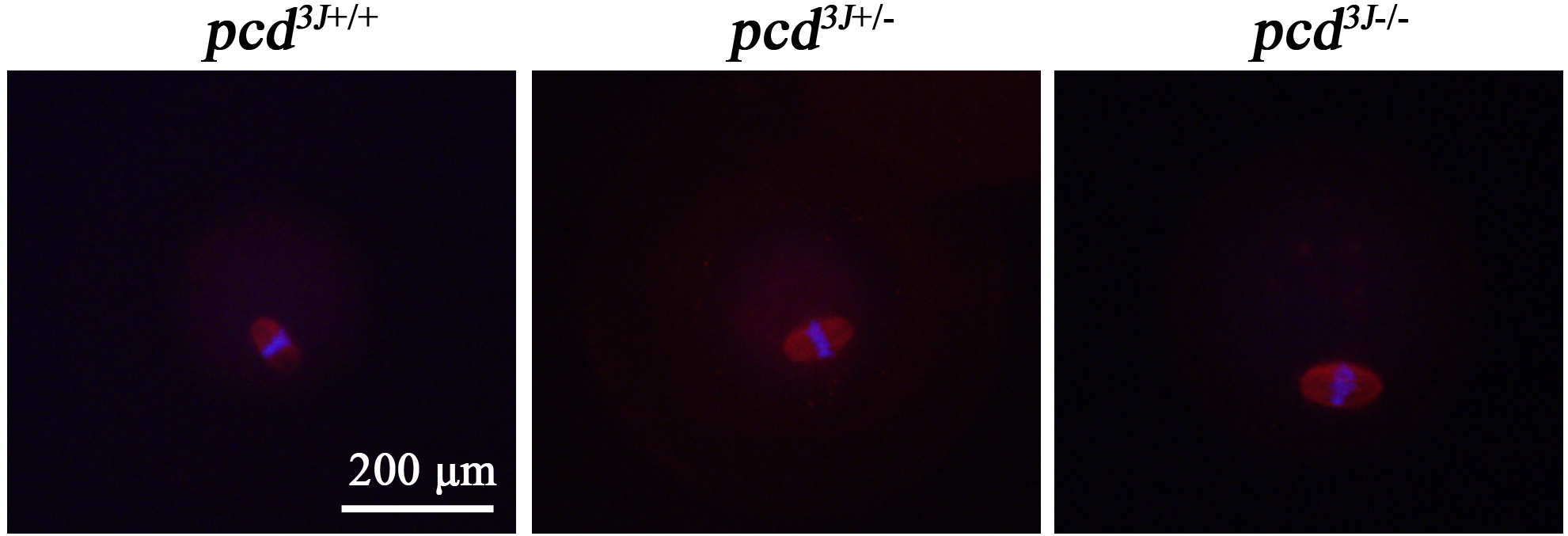
The mouse is an important model organism for the study of human genetic disease. The mouse mutant resource serves as a valuable tool for gene function studies in the post-genome era. Purkinje cell degeneration (pcd), an autosomal recessive mutant, exhibits diverse phenotypes including adult-onset degeneration of cerebellar purkinje cells, retinal photoreceptors and olfactory bulb neurons.
In our study, we described a phenotypic analysis on female subfertility in pcd mice in detail. We also suggested that CCP1 may not only have the deglutamylation function. For the discovery of functions of CCP1, we took advantage of yeast two-hybrid system to find out possible interacting substrates of CCP1. As a result, Snapin and RanbpM were identified from brain and testis cDNA libraries, respectively. and their interactions were further confirmed, although specific modification not deglutamylation was not found out yet. Taken together, our data not only provide phenotypic analysis but also provide clear candidate substrates of CCP1 for discovery of functions of CCP1 in pcd mice.
RELATED PAPERS
- Ning Song, Nameun Kim, Rui Xiao, Hojun Choi, Hyo-Im Chun, Min-Hee Kang, Jin-Hoi Kim, Kunho Seo, Nagasundarapandian Soundrarajan, Jeong-Tae Do, Hyuk Song, Zhao-Jia Ge, Chankyu Park. Lack of cytosolic carboxypeptidase 1 leads to subfertility due to the reduced number of antral follicles in pcd3J-/- females. PLOS ONE 10(10), 2015. PMID 26452267